
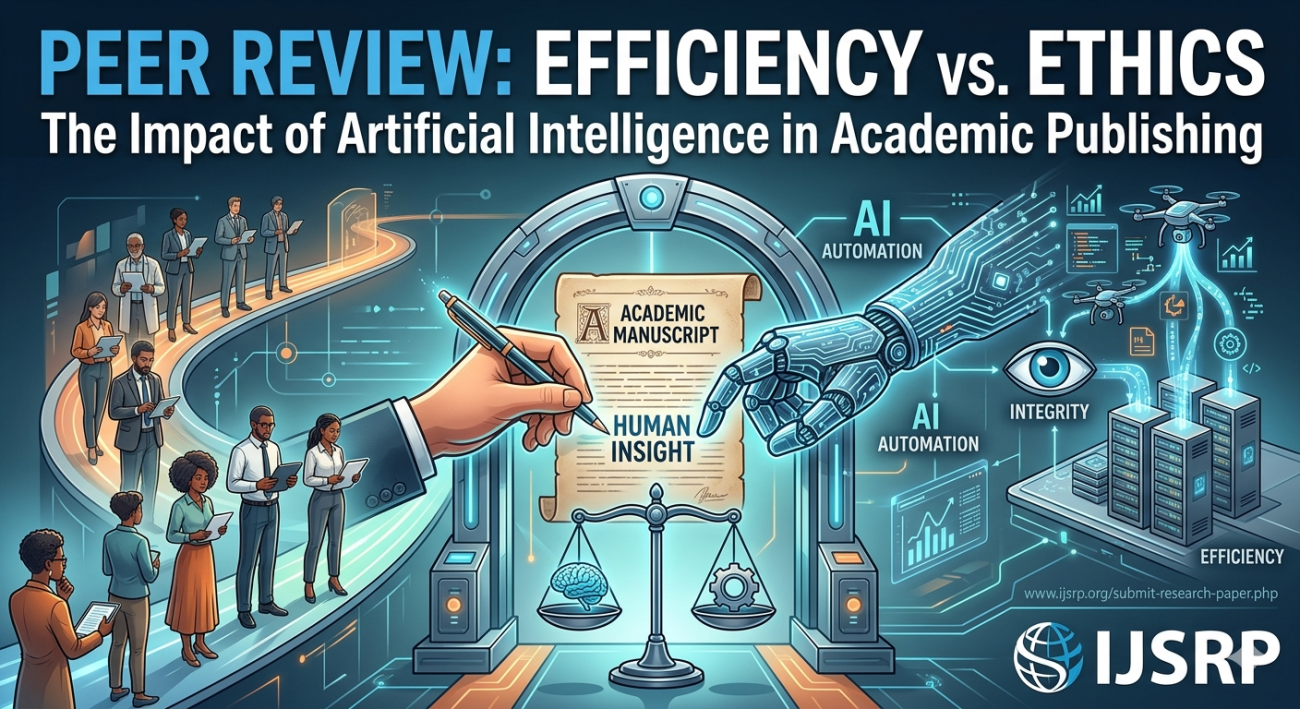
The landscape of academic publishing is undergoing a seismic shift. As the volume of global research submissions continues to climb, the traditional peer-review system—the “gold standard” of scientific integrity—is facing unprecedented pressure. To meet this demand, journals are increasingly looking toward Artificial Intelligence (AI) to streamline workflows. However, this transition brings a critical tension to the surface: Can we gain efficiency without sacrificing ethics?
The Efficiency Engine: How AI is Changing the Game
For decades, the peer-review process has been criticized for being slow. AI offers several “quick wins” that can significantly reduce the time between submission and publication:
- Reviewer Matching: One of the biggest bottlenecks is finding the right experts. AI algorithms can now scan the bibliography and abstract of a new submission and cross-reference them with massive databases of published researchers to find the perfect match in seconds.
- Initial Technical Screening: Before a human even sees a paper, AI tools can check for formatting compliance, verify that all citations are present, and run sophisticated plagiarism checks.
- Language and Clarity: AI-driven linguistic tools help editors assess whether a paper’s language is clear enough for review, ensuring that great science isn’t rejected simply because of a language barrier.
The Ethical Tightrope: The Risks of Automation
While the speed is enticing, the academic community remains cautious about the “black box” nature of AI. Several ethical questions remain:
- Bias in the Machine: AI is trained on historical data. If past publishing trends favored certain regions or institutions, the AI might inadvertently prioritize those over diverse, “high-signal” research from emerging markets.
- The Loss of Nuance: Peer review is more than just checking facts; it’s about weighing the novelty and creative “spark” of an idea. A machine may struggle to recognize a truly “outside-the-box” breakthrough that doesn’t fit established patterns.
- Confidentiality: Uploading sensitive, unpublished research into AI models raises concerns about data privacy and intellectual property. Protecting an author’s hard-earned insights is paramount.
The Hybrid Future
The consensus among forward-thinking journals is that AI should not replace the human reviewer, but rather empower them. By automating the administrative “drudgery,” human experts can focus entirely on the intellectual merit of the work.
At IJSRP, we recognize that the future of research depends on this balance—utilizing modern technical architectures while maintaining the rigorous standards that uphold scientific truth. We invite researchers to contribute to this evolving global dialogue by sharing their latest findings and methodologies.
Ready to share your research?
If you have developed new insights into AI, automation, or any other scientific field, you can submit your research paper here to join our global community of published authors.
